Weekly Reads
A space where we share a selection of thought-provoking content that we've recently come across.
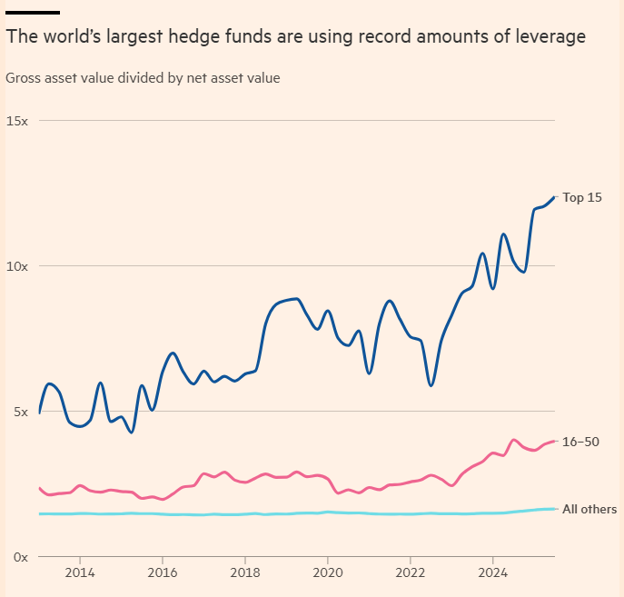
How a Trillion-Dollar Hedge Fund Borrowing Spree Became Wall Street’s Cash CowPost-GFC regulations forced Wall Street banks to retreat from proprietary trading, allowing hedge funds to enter and ultimately dominate market making. Banks have cashed in on this through prime brokerage, which has gone from a bank office function into a lucrative recurring revenue business. Prime services revenues are projected to reach $48bn this year, doubling since 2020. Lenders have secured an unassailable moat by supplying the multi-trillion-dollar credit lines that juice the returns of their former competitors. Leverage now for the top 15 hedge funds run at 11x gross leverage, stretching to 20-25x once derivatives are factored in.
"Big Short" investor Steve Eisman sits down with Ed Elson of Prof G Markets to analyze the current state of the artificial intelligence boom, drawing sharp parallels to past market cycles. Eisman argues that while open-weight models are rapidly eating into market share and ending the era of reckless "tokenmaxxing," the market’s primary vulnerability lies in extreme concentration risk—with roughly 70% of hyperscaler AI revenues flowing directly to OpenAI and Anthropic. He also raises concerns about off-balance-sheet debt being used for data center infrastructure, comparing the situation to past financial crises where companies sought to preserve credit ratings by hiding liabilities. Eisman also points out that the AI-related debt issuance is having a crowding out effect on the US Treasury market, contributing to higher yields.

To build a mental edge, investors must protect their confidence by focusing on small, incremental wins rather than fixating on large, past losses. It is essential to cultivate presence and detach from the fear and distractions that cause the brain to perceive market opportunities as threats. In an insightful episode of The Knowledge Project podcast, world-renowned performance psychologist Dr. Gio Valiante, who has coached elite figures ranging from legendary golfer Jack Nicklaus to billionaire hedge fund manager Steve Cohen, breaks down the psychological mechanics that separate consistent high achievers from those who stay stuck.

Colossus's profile on David Vélez details Nubank’s scale into a tier-one financial powerhouse, surpassing 140 million customers and $1 billion in quarterly net income on the back of a proprietary tech architecture and a structural $1 monthly cost-to-serve advantage. Having captured over 60% of Brazil's adult population and built market leaders in Mexico and Colombia, the company is now directing its low-cost machine toward the $1.2 trillion U.S. retail banking market under a conditional national bank charter. For shareholders, the piece outlines how Nu intends to deploy its proprietary underwriting models, zero-fee structure, and global accounts to challenge legacy banking incumbents on a worldwide stage.

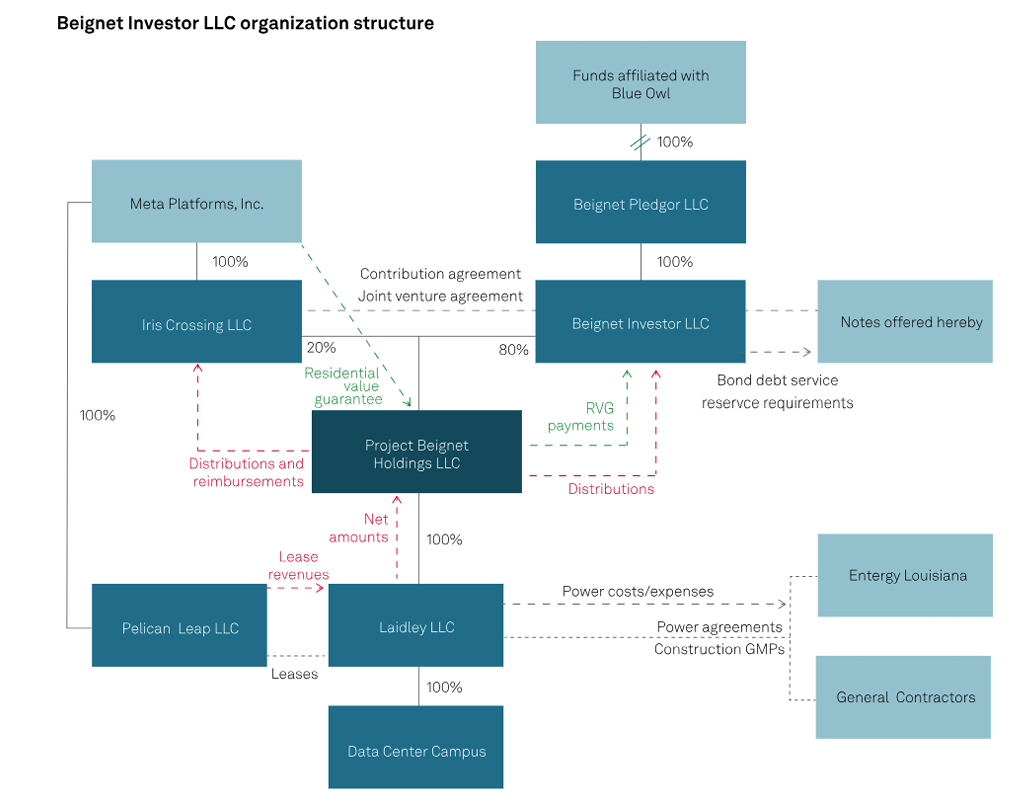
At roughly $10.3 trillion through 2032, or 3.6% of GDP a year, the U.S. data center buildout would surpass the relative scale of the canal, railroad, electrification, highway, and telecommunications booms, according to a new Brookings Papers on Economic Activity draft by Columbia Business School professor Stijn Van Nieuwerburgh. The more consequential finding is how it is being paid for. With hyperscaler capex projected to exceed combined operating cash flow for the first time this year, financing is shifting to leases, joint ventures, project debt, and private credit that sit largely outside the balance sheets we analyze. His case study is Meta’s Hyperion campus, carried at roughly 90% debt-to-assets in a vehicle held off Meta’s balance sheet and financed at least 100 basis points above Meta’s likely unsecured cost; the paper argues Meta pays that premium to keep its asset-light profile, not to get cheaper capital. Across the hyperscalers, the paper stops well short of predicting distress; its narrower point is that the leverage has been relocated rather than removed, into structures where tenant concentration and obsolescence risk are harder to see.
In a commentary piece for the Hudson Institute, China Center Director Miles Yu contends that Western foreign policy has long focused on managing the Chinese Communist Party as a permanent fixture, dangerously neglecting the possibility of its sudden collapse. Drawing historical parallels to the rapid fall of Soviet and Eastern European communism in 1989, Yu warns that the unravelling of the world's second-largest economy and a nuclear-armed state would trigger monumental global crises across military, financial, humanitarian, and non-proliferation domains. Advocating for proactive, interagency contingency planning, learning from the successes of Eastern European democratic transitions and the pitfalls of post-Soviet Russia, Yu emphasizes that preparing for a post-communist China is essential insurance against the century's most consequential geopolitical shock.