Weekly Reads
A space where we share a selection of thought-provoking content that we've recently come across.
The end of the game: Tiger Management, old-economy advocate, is closing
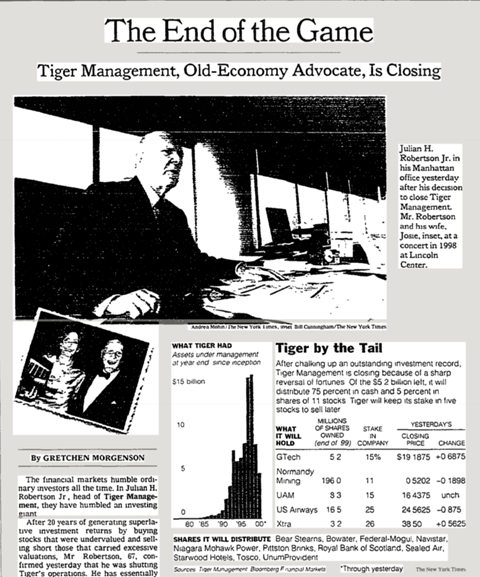
We’ve pulled this one from the archives for a reason. On March 31, 2000—the Nasdaq had just entered correction territory, down 11.7% from the peak—The New York Times chronicled the closing of Julian Robertson’s legendary Tiger Management. After Robertson refused to chase richly valued internet and technology stocks, sticking instead to “old economy” value names that the market had abandoned. Battered by redemptions and underperformance, Tiger threw in the towel. The timing is the lesson: the article was published within days of the dot-come bubble’s peak. The Nasdaq proceeded to decline 78.4% from peak to trough over a grueling two-and-a-half-year bear market. In the aftermath, value stocks would outperform growth stocks (measured with S&P Value Index vs S&P Growth Index) until 2018.
Sundar Pichai on AI backlash, the future of work and Google’s next era
Fresh off Google I/O and a +100% rally in the share price in the past year, Sundar Pichai had a remarkably transparent interview, conceding that while Google excels in multimodality and reasoning, it currently trails competitors like Anthropic in long-horizon, agentic coding tasks. Google’s answer to this is Antigravity, a standalone agentic-coding desktop app. Sundar also addresses the souring mood toward AI, framing it as a natural human reaction to unprecedented technological change.

Ayear after Eli Lilly acquired Verve Therapeutics, the bet is paying off with a major breakthrough. Results from the Heart-2 study of VERVE-102, published in The New England Journal of Medicine, showed LDL ("bad") cholesterolreductions of up to 62% from a single infusion, with durability sustained forup to 18 months. VERVE-102 is an in-vivo base-editing medicine designed topermanently switch off the PCSK9 gene in the liver — effectively mimicking therare genetic variants that leave some people with naturally low cholesterol andremarkable protection from heart attacks for life. It was well tolerated acrossall doses, with no treatment-related serious adverse events, and has alreadywon FDA Fast Track designation. The implication is profound: coronary artery disease affects more than 300 million people worldwide, and a one-time treatment could shift cardiovascular care from a lifetime of daily pills to asingle shot. Lilly plans to begin Phase II by the end of 2026.

Huawei’s big comeback tests limit of US chip controls
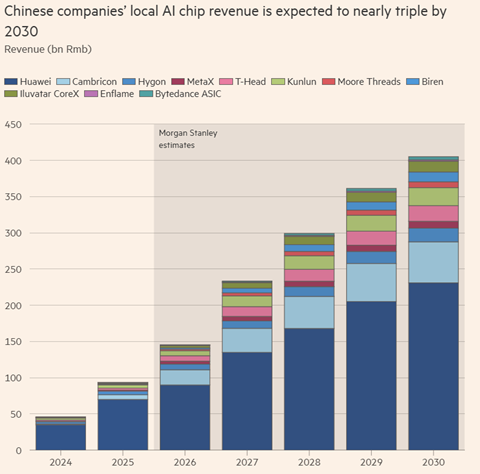
Cut off from advanced foreign semiconductor technology since 2019, Huawei quietly worked for years to design and manufacture silicon at home with domestic technology. Huawei employs the best engineers in China and they discovered a breakthrough called LogicFolding which mimics the density of a 1.4nm process node while still usingdeep ultra-violet machines and not ASML’s latest technology of extremeultra-violet machines. The inflection of achieving this density is in 2030 and it’s largely unsubstantiated, so just an ambition for now. By then, TSMC will have 3 years of high-volume output of physical 1.4nm and A10 (1nm process node) will already be in production too. This breakthrough allows China to stay in the race but not necessarily narrow the gap with US and Taiwan. Impressive nonetheless given their constraints.
Is the luxury handbag’s heyday ending?
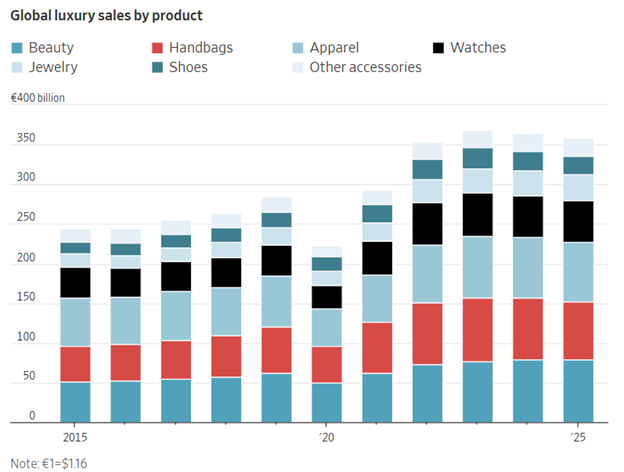
A luxury market slowdown has left a major revenue gap as consumers increasingly choose unique vintage pieces over mass-produced new releases to bypass algorithm-guided trends. This behavioral shift pressures top luxury groups. Handbags are critical profit engines that justify the world’s largest retail rents. Exposure is severe: Hermès relies on bags for 44% of sales, while Saint Laurent and Bottega Veneta depend on them for 65% and 77% respectively. Yet, stagnation isn’t new. In 2015, severe logo fatigue was reversed through design innovation. Brands face a new structural challenge: their own vintage legacy is now their fiercest competitor. Fashion is elusive.