
Weekly Reads
A space where we share a selection of thought-provoking content that we've recently come across.
America's AI build-out hinges on Chinese electrical parts
The global AI race is currently facing a physical reality check: large hyperscaler capex budgets and cutting-edge software are effectively useless without the basic electrical hardware to power them. A significant portion of US data centers is being delayed or canceled due to a shortage of transformers, switchgear, and batteries. High-power transformers that once took 24 months to deliver now face time lead times of up to five years, driving companies like Crusoe to refurbish old equipment from shuttered power plants to stay on schedule. These electrical equipment parts are primarily manufactured in China.

Michael Mauboussin on AI and base rates
In a thought-provoking conversation about base rates applied to AI growth expectations, Michael Mauboussin and Kai Wu challenge the historic "inside view" optimism currently surrounding OpenAI. OpenAI reported ~$3.7bn of revenue in 2024, and they are projecting $145bn by 2029. This represents a 108% CAGR over five years. Mauboussin’s team analyzed every US public company since 1950, focusing on a reference class of businesses starting with $2bn to $5bn in revenue. Out of 18,900 “firm years” examined, not a single company has ever achieved a 108% CAGR over five consecutive years. The average growth rate of this group was 7% with a standard deviation of 10.6%. OpenAI’s revenue projection registers a 9.5 standard deviation event.

Annie Duke on Thinking in Bets
True decision-making excellence requires decoupling outcomes from process. Annie Duke argues that a winning result does not validate a poor process (going through a red light without an accident doesn’t make it a good decision). This interview explores how to transition from implicit "gut" feelings to explicit, high-fidelity thinking by leveraging tools like premortems, mental time travel, and base rates. Whether you're navigating a career shift or managing a portfolio, as she did in her book, Thinking in Bets, Annie provides a blueprint for becoming a superior risk-taker by leaning into the probabilistic nature of reality rather than fearing it.

Out-of-this-world IPO
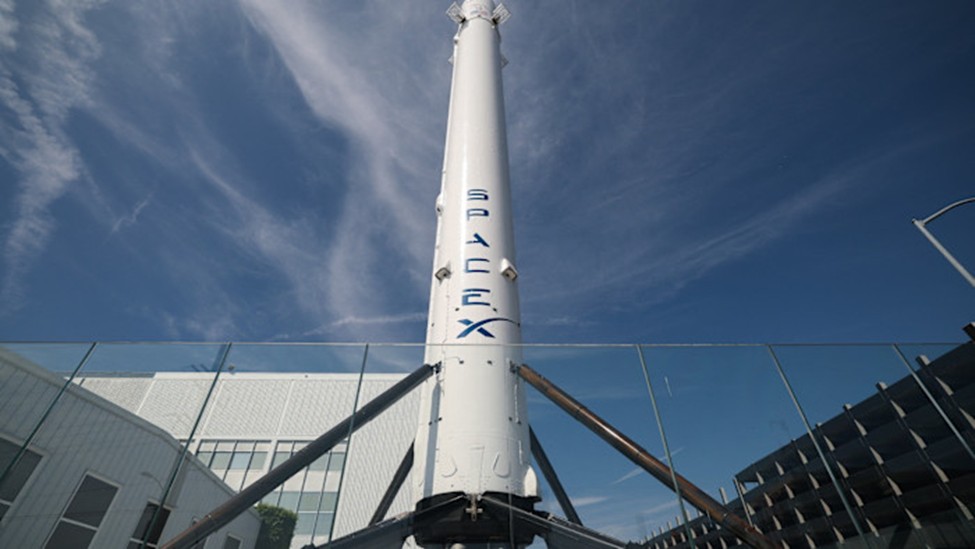
The much-anticipated SpaceX IPO is confirmed, and set to be the largest in history, 2.6x larger than Saudi Aramco’s IPO, at $75bn with a valuation roughly of $1.75 trillion. SpaceX is now a conglomerate after its acquisition last month of xAI for $250bn. The listing potentially timed for June to coincide with a rare planetary alignment, just as Nasdaq rewrites its rulebook to funnel billions in passive index funds toward the stock within weeks of its debut. SpaceX plans to float less than 5% of its equity. Nasdaq currently has a condition that for companies to join its Nasdaq 100 Index, at least 10 percent of a company’s equity has to be offered to the public. Nasdaq also said it is reducing the wait period for companies to be eligible for index inclusion from 3 months to 15 days. SpaceX is considering a non-traditional, staggered lock-up for its IPO, potentially allowing early investors and employees to sell shares sooner than the standard 180-day lock-up period. One could be forgiven for wondering whether the rules are being rewritten for investors—or for one.
The erosion of Europe's energy sovereignty
In this analysis of continent’s energy history, the author examines how the “industrial cathedrals” of the post-1973 era were sacrificed for ideological commitments that mistook de-industrialization for climate progress. While China aggressively secures its future through “economically irrational” coal-to-liquids programs and strategic stockpiling, Europe manages its decline through demand destruction and emergency imports. From the shuttered reactors of Germany to the untapped shale of the Midlands, the question remains: will the current crisis force a return to material reality, or will the foundations of European prosperity continue to be traded for moral positioning?

