Weekly Reads
A space where we share a selection of thought-provoking content that we've recently come across.
Interview With The CEO of Eli Lilly
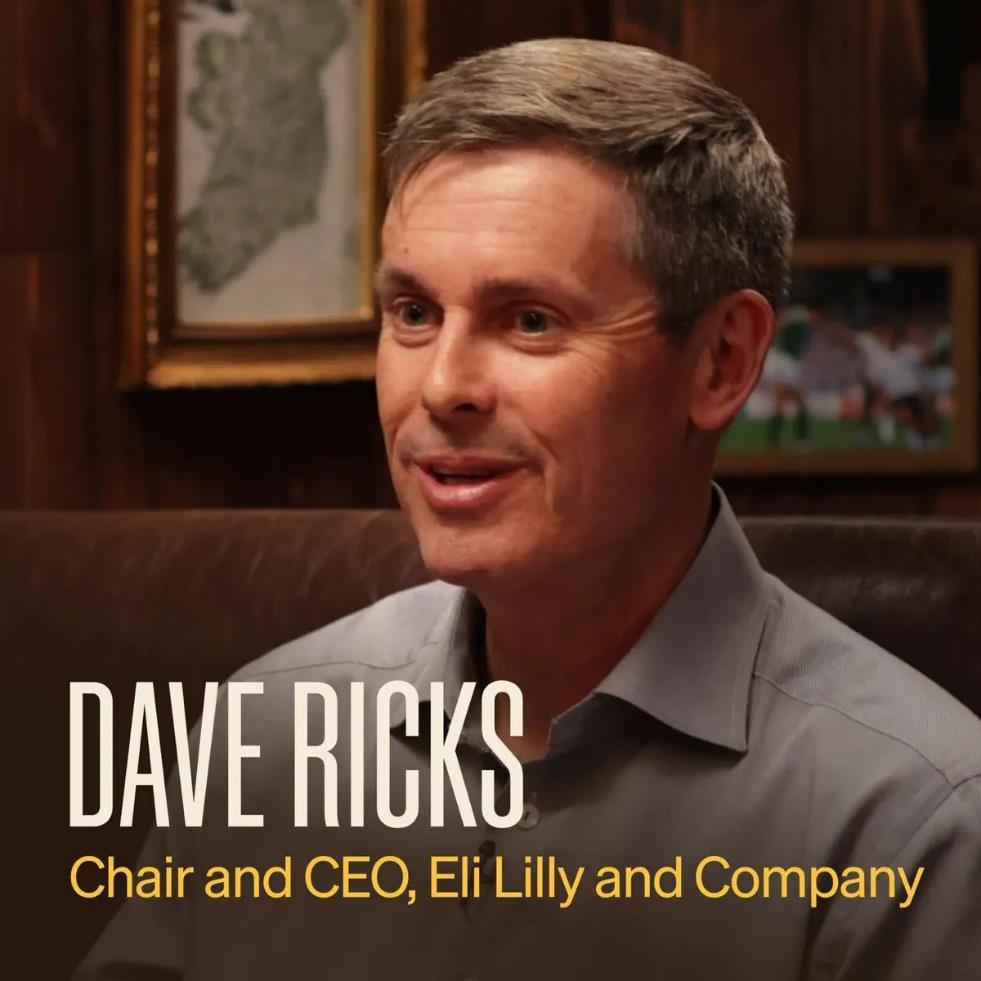
Eli Lilly CEO Dave Ricks detailed the company's aggressive, multi-faceted strategy that has established it as the world's most valuable pharma company, centered around its market leadership in the new GLP-1 diabetes and weight loss drugs. The company is simultaneously disrupting the traditional distribution model by launching Lilly Direct for a direct-to-consumer sales experience and focusing its R&D, which is at a "nation state level" of $14 billion annually, on high-leverage investments like building a proprietary, state-of-the-art Nvidia supercomputer for drug discovery and optimizing clinical trial recruitment through direct patient outreach. This investment is supported by a long-term leadership philosophy that balances internal promotion to preserve culture with external hires to spur innovation and operational excellence.
AI Disruption or Reinvention: Microsoft at a Crossroads
Microsoft’s decision to pause but not stop Azure capacity expansion reflects Satya Nadella’s long-term strategy to scale across time rather than lock the company into infrastructure optimized for a single generation of hardware or a single model provider. By waiving its right of first refusal with OpenAI and slowing near term buildout, Microsoft prioritized fungibility across workloads, geographies, and customers, avoiding the risk of building massive capital intensive infrastructure that could be rendered obsolete by rapid shifts in model architectures, hardware power density, or cooling requirements. Nadella is explicit that Microsoft does not want to be the host for one model company with a limited planning horizon or to overexpose itself to low-margin bare metal accelerator hosting, which risks crowding out higher value businesses. Instead, Microsoft aims to win across the full AI stack by pairing profitable infrastructure with software and capturing the highest margins in the scaffolding layer, such as data governance, compliance, memory retrieval agent frameworks, and orchestration, which make models usable in enterprises and often integrate directly into the models themselves. This positions Microsoft to benefit regardless of which model family wins while expanding into applications and agents where demand for compute becomes multiplicative. At the same time, Microsoft is quietly preparing for life after OpenAI by building its own MAI research team staffed with former DeepMind leaders using internal compute selectively for cost optimization and foundational research rather than duplicating GPT efforts. The broader implication is that Microsoft is trading short-term hyperscale dominance for long-duration returns by avoiding commoditized infrastructure exposure and anchoring its AI strategy in fungible platforms, recurring pricing models, and ultra-high margin software layers that can endure multiple technology cycles.

Inside the First AI-Driven Cyber Espionage Campaign
In November 2025, Anthropic disclosed and disrupted what it identified as the first large scale AI orchestrated cyber espionage campaign. A state-sponsored threat actor used autonomous AI capabilities to conduct reconnaissance, write exploit code, harvest credentials, and exfiltrate data with minimal human involvement. The campaign targeted roughly 30 global organizations, including major technology firms, financial institutions, chemical manufacturers, and government agencies. The incident highlights a significant escalation in the misuse of agentic AI systems for offensive cyber operations and underscores the urgent need for stronger defenses, improved detection tools, and greater cross-industry transparency to address rapidly evolving AI-driven threats.

The UK’s Budget Squeeze and Europe’s Social Model at Risk
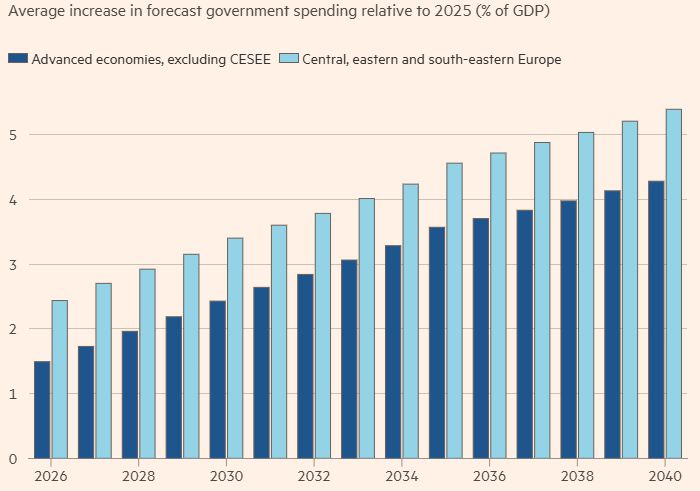
Britain’s budget challenges highlight the structural fiscal pressures facing many European governments. Ageing populations, rising healthcare and pension obligations, and elevated public spending are colliding with modest economic growth and limited fiscal flexibility. The UK experience shows how reliance on incremental policy adjustments rather than comprehensive reform may constrain future public investment and influence sovereign debt dynamics and tax policy. These pressures are likely to reshape the operating environment for businesses, with downstream effects on consumption, labor participation, interest rates, and the relative attractiveness of European equities, credit, infrastructure, and real assets over the medium to long term.
The End of Scaling, The Beginning of Breakthroughs
Ilya Sutskever, cofounder of Safe Superintelligence, argues the AI industry is transitioning from an age of scaling to an age of research as simply adding data and compute delivers diminishing returns. Today’s frontier models exhibit weak real-world generalization, excelling on benchmarks but underdelivering economically, suggesting progress has been distorted by metric optimization rather than true intelligence. Sutskever contends that unlocking the next phase of AI requires discovering a new machine learning principle, analogous to how human emotions act as an efficient internal value function that outperforms brute force reinforcement learning. He reframes superintelligence not as a static product but as a continually learning system that compounds capabilities through deployment. This implies a potential shift in value creation away from pure scale advantages, such as compute data and capital intensity, toward differentiated research talent, algorithmic breakthroughs, and defensible learning architectures. SSI’s research only strategy reflects perhaps a broader convergence among frontier labs where the first firm to achieve robust generalization and aligned continual learning may capture outsized, durable returns, while capital-heavy scaling strategies face increasing commoditization risk.